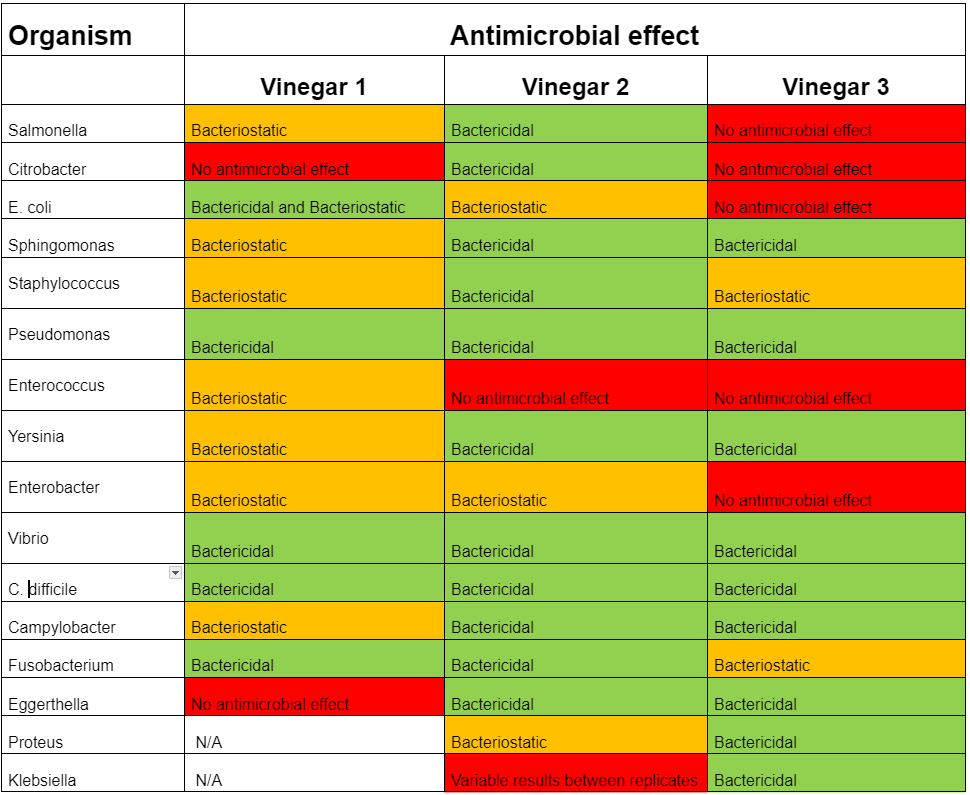
To keep things simple, we’ve recommended one vinegar (or tincture) for each pathogen, see the chart below.
| Vinegar No. 1 | Vinegar No. 2 | Vinegar No. 3 | Ashwagandha | |
| Campylobacter | ✓ | |||
| Citrobacter | ✓ | |||
| Clostridioides (C. difficile) | ✓ | |||
| Eggerthella | ✓ | |||
| Enterobacter | ✓ | |||
| Enterococcus | ✓ | |||
| Escherichia-Shigella (E. coli) | ✓ | |||
| Fusobacterium | ✓ | |||
| Pseudomonas | ✓ | |||
| Salmonella | ✓ | |||
| Sphingomonas | ✓ | |||
| Staphylococcus | ✓ | |||
| Vibrio | ✓ | |||
| Yersinia | ✓ |
However the marvelous reality of herbal antimicrobials is that they are often effective against more than one pathogen! If you’d like to create a DIY anti-pathogen treatment for yourself, you can dive into the more complex chart here: